


aluminum honeycomb door panel
Solid Wood Door Panels:
Advantages: They feature natural wood grain and color, a gorgeous appearance, exquisite carvings, and a variety of styles, creating a warm and natural feel. Furthermore, solid wood door panels are non-deformable, corrosion-resistant, and crack-free, and offer excellent sound absorption and insulation.
Disadvantages: They are relatively expensive and require a complex manufacturing process. They are difficult to clean and have poor flame retardancy. They require high installation techniques and hardware, and require regular maintenance.
Aluminum Honeycomb Door Panels
Advantages: They are lightweight, high-strength, and durable, with a stable structure. They offer excellent sound and heat insulation, and are waterproof and moisture-resistant. They are easy to cut, drill, and form, allowing for a wide range of design options. Furthermore, aluminum offers excellent fire resistance, enhancing safety.
Disadvantages: They are relatively expensive, especially in terms of initial investment. Their surface is relatively soft and susceptible to physical damage, such as scratches and dents. The manufacturing process may produce some carbon emissions, which has a certain impact on the environment (although aluminum is recyclable).
Aluminum honeycomb panels can indeed be used for room doors and have many advantages.
Sturdy and durable structure: Aluminum honeycomb panels use an aluminum honeycomb core structure, which makes the door lightweight and sturdy, able to withstand the pressure of daily use and not easily deform.
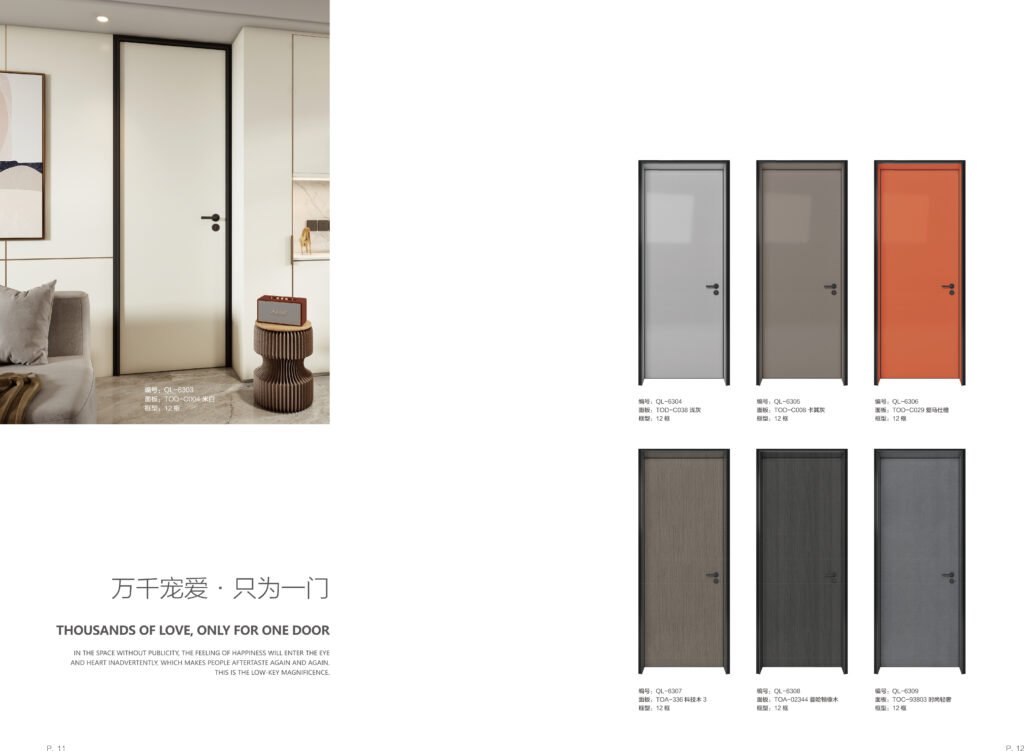
Aesthetically uniform: The surface of aluminum honeycomb panels can be made in a variety of colors, such as light gray, which can be paired with matching door frames and locks for a harmonious overall look, suitable for modern minimalist decor.
Lightweight and easy to install: Compared to solid wood doors or other traditional materials, aluminum honeycomb panel doors are lighter, easier to install, and place less pressure on the door frame.
Environmentally friendly: Aluminum honeycomb panels do not contain harmful substances, such as formaldehyde, making them suitable for homes with high environmental protection requirements.
However, there are a few points to note:
Aluminum honeycomb panel doors may not be as soundproof as solid wood doors. If soundproofing is a high priority, additional soundproofing treatment may be required.
While the surface is durable, it may leave marks if accidentally scratched, so please take care when using it. If you prefer a minimalist style while still wanting a lightweight and durable door, aluminum honeycomb panels are a great choice.
Aluminum honeycomb panels are lightweight, durable, and highly resistant to deformation, making them suitable for use in humid environments.
Waterproof and moisture-proof: The aluminum base and honeycomb structure form a sealed barrier, completely eliminating the mold and deformation problems of traditional wooden doors, making them particularly suitable for use in humid southern regions.
Environmentally friendly and healthy: Zero formaldehyde emissions and ready for immediate use after installation, making them ideal for families with children.
High strength: With a tensile strength of 6.0 MPa and a compressive strength of 4.5 MPa, they are resistant to damage from daily use.
Elegant and versatile: Available in a variety of finishes, including wood and stone grain, the matte, skin-feel film is easy to clean, balancing aesthetics with practicality.
In short:
If you’re looking for lightweight, high strength, structural stability, and excellent sound and heat insulation, while also considering environmental and fire resistance, aluminum honeycomb panels are a great choice.
- Aluminum Honeycomb Panel: Complete Technical Guide for Building & Construction
- What is aluminum honeycomb used for?
- Advantages of Aluminum Honeycomb Panels for Custom Cabinets and Furniture
- Advantages of Aluminum Honeycomb Panels in Airport and Public Space Applications
- How is aluminum honeycomb panel produced and the production process of aluminum honeycomb panel
- Should I choose honeycomb aluminum panels or solid multi-layer panels for bathroom cabinets?

