


Should I choose honeycomb aluminum panels or solid multi-layer panels for bathroom cabinets?
As a space with high humidity and frequent use in the home, the bathroom places stringent requirements on the material selection for bathroom cabinets. Honeycomb aluminum and multi-layer panels are two common bathroom cabinet materials on the market, each with its own unique advantages and limitations.
I. Material Characteristics
Honeycomb aluminum panels are a composite material composed of two layers of aluminum sheets sandwiching a honeycomb core (typically a paper, plastic, or aluminum honeycomb structure). This structure gives honeycomb aluminum its lightweight and high strength, making it widely used in aviation, architecture, and furniture. In bathroom cabinets, honeycomb aluminum is often used as the front panel of the cabinet door or cabinet body. The core is usually made of paper or plastic, with an aluminum alloy or coating on the surface for both aesthetics and protection.
Advantages:
- Lightweight and High Strength: Honeycomb aluminum weighs significantly less than solid wood or multi-layer panels of the same volume, yet its bending stiffness rivals or even exceeds that of traditional materials.
- Environmental friendliness: The honeycomb structure reduces wood usage, and some products utilize recyclable aluminum, embracing green environmental protection.
- Corrosion Resistance: The aluminum alloy surface is rust-resistant, making it suitable for the high humidity environment of the bathroom.
Disadvantages:
- Limited Thermal and Sound Insulation: The honeycomb structure’s cavity design results in slightly lower thermal and sound insulation, which may affect the user experience in the bathroom.
- Complex Processing: Honeycomb aluminum requires a high level of manufacturing process. Improper processing may result in uneven edges or exposed core material.
- Multi-Plywood
Multi-Plywood (also known as plywood) is made by interlacing and gluing multiple layers of thin wood veneer, with the grain of each layer running perpendicular to the other, to enhance structural stability. High-grade multi-plywood (such as BWR or BWP grade waterproof plywood) is often used in bathroom cabinets. It is coated with waterproof paint or veneer for enhanced durability.
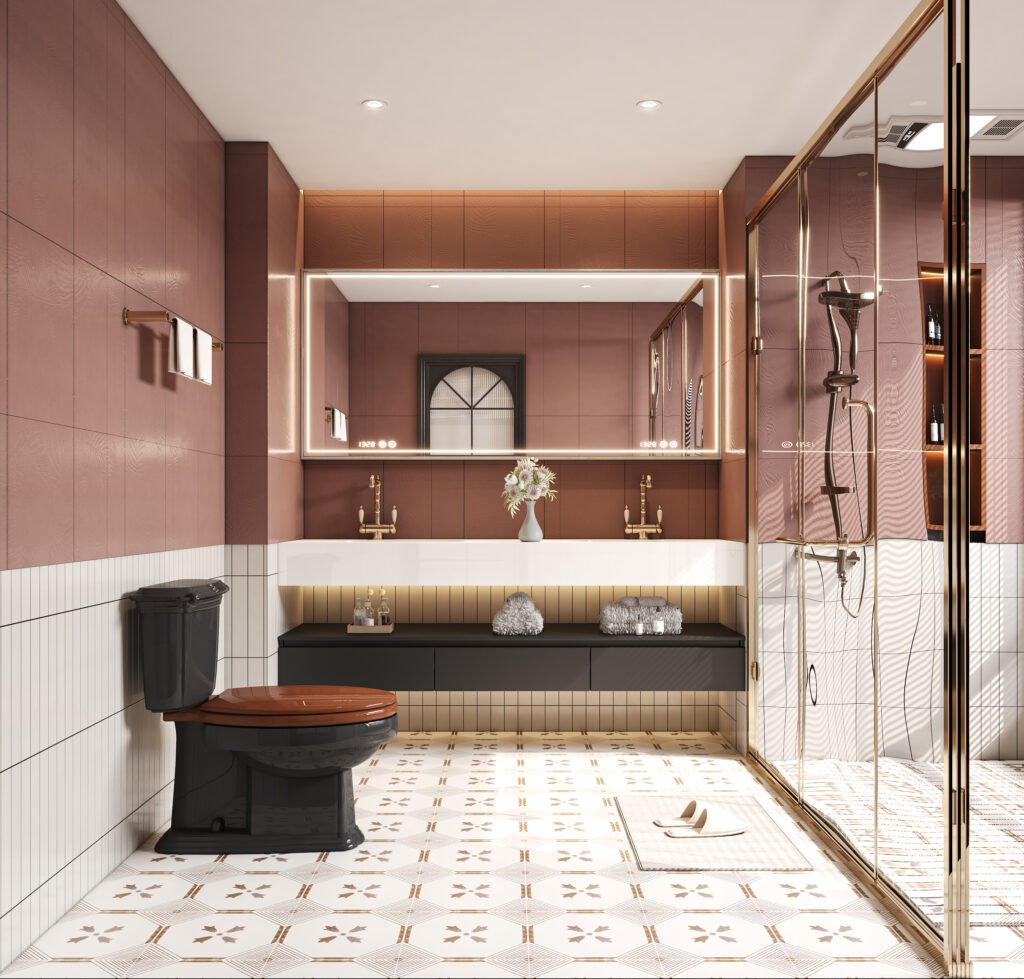
Advantages:
- Structural Stability: Multi-plywood’s staggered grain design effectively resists deformation, making it less susceptible to expansion and contraction than solid wood.
- Aesthetics: The surface can be veneered or painted, creating a natural wood grain or a variety of colors, suitable for a variety of decor styles.
- Flexible Processing: Multilayer panels are easy to cut and process, making them suitable for custom designs.
Disadvantages:
- Quality Variation: The quality of multilayer panels varies significantly depending on the glue and wood grade. Lower-grade products may contain voids or use inferior glue.
- Heavier Weight: Compared to honeycomb aluminum, multilayer panels have a higher density and may require stronger support during installation.
II. Waterproofing
- Honeycomb Aluminum Panels
The aluminum alloy surface of honeycomb aluminum is naturally corrosion-resistant. Using a water-resistant paper or plastic honeycomb core (such as polypropylene) further enhances its water resistance. Even in the high humidity environment of a bathroom, honeycomb aluminum cabinets will not expand or deform due to water absorption. Furthermore, aluminum does not require additional sealing, reducing maintenance costs.
Notes:
- Edge sealing is critical. Improper edge preparation can allow moisture to penetrate the core, causing structural damage.
- Surface coatings (such as PVDF fluorocarbon coatings) can enhance durability, but the coating quality must be ensured.
- Multilayer Board
The waterproof performance of multilayer board depends on the quality of its glue and surface treatment. High-quality waterproof multilayer board (such as marine-grade plywood) uses a waterproof adhesive that effectively resists the steam and water splashes found in bathrooms. The surface is often coated with a waterproof paint or melamine veneer to provide a protective layer. However, if the surface coating is damaged or the edges are not properly sealed, moisture can penetrate, causing delamination or swelling.
Precautions:
- Regularly inspect the surface coating and reseal as necessary.
- Low-grade multilayer board may peel or warp in prolonged humidity.
— Honeycomb aluminum offers slightly better waterproofing and is particularly suitable for high-humidity bathrooms, but ensuring the edges are sealed is crucial. Multilayer board requires high-quality surface treatment and regular maintenance to maintain its waterproofing.
III. Durability and Lifespan
- Honeycomb Aluminum Board
The durability of honeycomb aluminum boards stems from their high strength and corrosion resistance. The aluminum alloy surface is resistant to scratching or deformation and does not crack due to humidity fluctuations. Under normal use, honeycomb aluminum bathroom vanities can last over 20 years, making them particularly suitable for frequently used family bathrooms. However, if the core material is paper honeycomb, long-term stress may cause localized deformation.
- Multilayer Board
High-grade multilayer board offers durability similar to that of solid wood, and its cross-layer structure makes it more resistant to warping than solid wood. In bathroom environments, high-quality multilayer board (such as BWP-grade plywood with a high-quality melamine veneer) can last 10-20 years, but it is important to avoid long-term water damage. Low-grade multilayer board may only last 5-10 years.
— Honeycomb aluminum offers advantages in durability, particularly in terms of corrosion and deformation resistance; the lifespan of multilayer board depends on the material grade and maintenance.
IV. Cost and Budget
- Honeycomb Aluminum Board
Honeycomb aluminum’s complex manufacturing process and the high cost of raw materials (such as aluminum alloy) contribute to its overall high price. The market price of honeycomb aluminum bathroom cabinets typically ranges from 2,000 to 4,000 RMB per square meter, depending on the surface finish and core material type. However, its lightweight design reduces shipping and installation costs.
- Multi-layer Board
The cost of multi-layer board varies depending on quality. Standard multi-layer board is relatively low (500-1,500 RMB per square meter), while high-grade waterproof multi-layer board (such as marine grade) is priced close to solid wood (1,500-3,000 RMB per square meter). Multi-layer board has lower processing costs and is suitable for budget-conscious consumers.
Multi-layer board offers a cost advantage and is suitable for families with limited budgets; honeycomb aluminum is more expensive, but may offer better long-term value.
V. Installation and Maintenance
- Honeycomb Aluminum Board
The lightweight nature of honeycomb aluminum makes it easy to transport and install, making it particularly suitable for wall-mounted bathroom cabinets. Regarding maintenance, the aluminum alloy surface is easy to clean, requiring only a damp cloth and no additional sealing. However, care should be taken to avoid scratching the surface coating with hard objects, as this may affect the aesthetics.
- Multilayer Board
Due to its higher density, multilayer board requires stronger wall support during installation, especially for wall-mounted designs. Regarding maintenance, the surface coating of multilayer board should be regularly inspected to prevent water infiltration. When cleaning, use a slightly damp cloth and wipe dry immediately to avoid moisture retention.
— Honeycomb aluminum is easier to install and maintain, making it particularly suitable for modern, minimalist bathrooms. Multilayer board requires higher maintenance, but offers flexibility and is suitable for complex designs.
VI. Design Aesthetics
- Honeycomb Aluminum Board
Honeycomb aluminum bathroom vanities typically feature a modern, industrial design. The surface can be painted or electroplated to achieve a metallic finish or a variety of colors, making them suitable for modern, minimalist, or high-end bathrooms. However, their relatively monotonous design may not appeal to those seeking a traditional or warm ambiance.
- Multilayer Board
Multilayer board can be finished with wood veneer, lacquer, or melamine veneer, offering a wide variety of textures and colors, suitable for a variety of styles, including traditional, rustic, and Nordic. Its wood-like texture creates a warm bathroom ambiance, making it a popular choice among Chinese families.
–Multi-layer panels offer design flexibility and style diversity; honeycomb aluminum is more suitable for modern styles, but offers a narrower range of design options.
VII. Comprehensive Recommendations
When choosing between honeycomb aluminum and multi-layer panels for bathroom cabinets, consider the following factors:
- Budget: Budget-conscious consumers can choose cost-effective multi-layer panels; those seeking a long-term investment can opt for honeycomb aluminum panels.
- Bathroom Environment: Honeycomb aluminum panels are suitable for bathrooms with high humidity or frequent use (such as master bathrooms); multi-layer panels are suitable for bathrooms with low humidity or light use (such as guest bathrooms).
- Style Preference: Families pursuing a modern, minimalist style can choose honeycomb aluminum panels; those preferring a traditional or warm atmosphere can choose multi-layer panels.
- Maintenance Aspirations: Consumers seeking low maintenance can choose honeycomb aluminum panels; those willing to maintain regular maintenance can choose multi-layer panels.
Recommended Scenarios:
- Honeycomb aluminum panels: Suitable for high-end residences, hotel-style bathrooms, or spaces requiring wall-mounted designs, emphasizing durability and a modern feel.
- Multi-layer board: Suitable for average family bathrooms, those with a limited budget, or those seeking a wood-like finish.
You should consider your budget, bathroom environment, and decorating style. Regardless of the material you choose, it’s recommended to purchase from reputable brands and ensure proper construction and sealing to extend the life of the bathroom cabinet.
- Aluminum Honeycomb Panel: Complete Technical Guide for Building & Construction
- What is aluminum honeycomb used for?
- Advantages of Aluminum Honeycomb Panels for Custom Cabinets and Furniture
- Advantages of Aluminum Honeycomb Panels in Airport and Public Space Applications
- How is aluminum honeycomb panel produced and the production process of aluminum honeycomb panel
- Should I choose honeycomb aluminum panels or solid multi-layer panels for bathroom cabinets?

